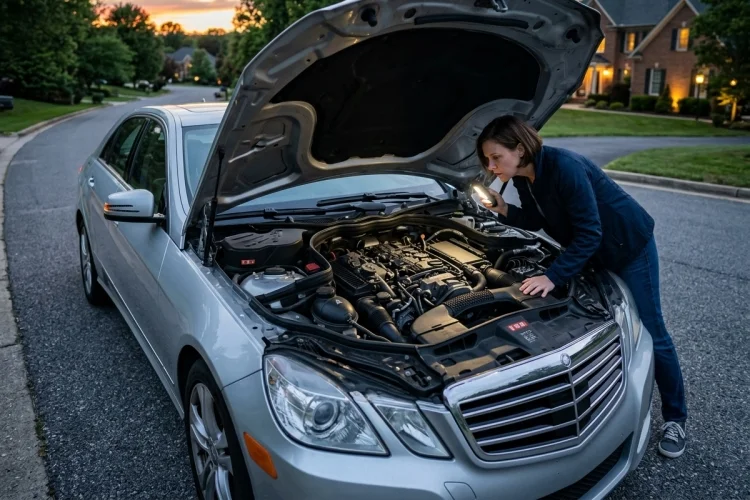
Hearing a knocking sound from under the bonnet can instantly make you worry about an expensive repair. The noise might appear only during acceleration, when the engine is cold, or while the car is sitting at idle.
Sometimes it sounds like light metallic tapping; in other cases, it is a deep, heavy thud. So, why is my engine making a knocking noise? There is no single answer because drivers use the word “knock” to describe several different sounds.
It could be combustion knock caused by unsuitable fuel, a lubrication problem affecting the bearings, a worn timing component, overheating, or even a loose accessory outside the engine.
The timing and character of the sound provide important clues. A metallic ping under load is different from a deep knock that follows engine speed. However, diagnosing an internal engine problem by sound alone is risky.
Some causes are relatively simple, while others can quickly lead to major damage. The safest approach is to notice when the noise occurs, check for warning lights, and avoid continuing to drive when serious symptoms appear.
What Does Engine Knocking Sound Like?
Engine knocking is not one specific mechanical condition. It is a general description for an unusual repetitive sound that changes with engine speed or load.
A light metallic pinging noise often appears during acceleration, especially when climbing a hill or using a high gear at low RPM. This may indicate abnormal combustion inside a petrol engine.
A deep, dull knock from the lower engine can suggest excessive movement around the crankshaft or connecting-rod bearings. This sound may become louder as the engine warms up, accelerates, or operates under load.
Ticking from the top of the engine may involve the valve train, fuel injectors, or low oil pressure. A rattle during a cold start could point toward a timing chain or tensioner.
Not every unusual sound comes from inside the engine. Belt tensioners, pulleys, exhaust shields, engine mounts, and air-conditioning compressors can also create knocking or rattling noises.
Combustion Knock and Low-Octane Fuel
Combustion knock, sometimes called detonation or spark knock, happens when part of the air-fuel mixture ignites abnormally inside a petrol engine.
During normal operation, the spark plug starts a controlled flame that moves across the combustion chamber. With knock, some of the unburned mixture autoignites because of heat and pressure, creating sharp pressure waves.
These waves can produce a metallic pinging sound, particularly during hard acceleration. Higher engine load, elevated temperature, excessive boost, incorrect ignition timing, and unsuitable fuel can increase the likelihood of knock.
Octane rating measures petrol’s resistance to this uncontrolled ignition. Engines with turbocharging or high compression may require higher-octane fuel because they operate under greater cylinder pressure.
Toyota warns in its owner guidance that persistent knocking can eventually cause engine damage.
What Should You Do?
Check the fuel grade specified on the filler flap or in the owner’s manual. When premium fuel is required, consistently using a lower grade can cause the engine computer to reduce performance in an attempt to protect the engine.
Modern knock sensors detect the characteristic high-frequency vibrations produced by abnormal combustion. The sensor sends this information to the engine control unit, which can adjust ignition timing.
Occasional mild pinging does not automatically prove that the engine is damaged. Persistent or severe knocking, however, deserves professional diagnosis—especially when you are already using the correct fuel.
Low Engine Oil and Bearing Problems
Engine oil creates a protective film between moving metal components. It allows the crankshaft journals and bearings to operate without constant direct contact.
When the oil level or pressure becomes too low, that protective film may break down. MAHLE explains that engine bearings depend on a continuous layer of clean oil to keep the shaft and bearing surfaces separated.
A lubrication problem may cause ticking, tapping, or deeper knocking sounds. The exact noise depends on which components are affected and how far the damage has progressed.
Connecting-Rod Knock
Connecting rods join the pistons to the crankshaft. Their lower ends rotate around crankshaft journals on thin bearing shells.
When a rod bearing becomes badly worn, additional clearance can allow the connecting rod to strike against the journal during changes in load. This may produce the deep metallic sound commonly called rod knock.
Rod knock often becomes more noticeable when the accelerator is pressed. It is a serious condition because continued operation can damage the crankshaft, connecting rod, engine block, or other internal parts.
A red oil-pressure warning makes the situation more urgent. Stop safely and switch off the engine according to the owner’s manual. Adding oil may correct a low level, but it cannot repair a damaged bearing or failed oil pump.
Worn Timing Chain or Valve-Train Components
The timing system keeps the crankshaft and camshaft synchronised. Depending on the engine, it may use a timing belt, chain, tensioners, guides, and sprockets.
A worn or stretched timing chain may create a rattling or knocking sound, especially for a few seconds after a cold start. Low oil pressure can make the problem worse because many modern tensioners depend on engine oil to operate correctly.
Gates notes that failing tensioners or worn guides can contribute to timing-chain problems. A worn chain and sprocket combination may produce rattling and can eventually affect engine timing.
The valve train can produce similar sounds. Hydraulic lifters, camshaft followers, rocker arms, and valves all operate at high speed near the top of the engine.
A light ticking sound may be normal for some direct-injection systems, as injectors can be naturally noisy. A new, increasingly loud, or irregular noise should still be inspected rather than dismissed as normal.
Overheating and Abnormal Combustion
An overheated engine may also begin knocking or pinging. Excessive temperature increases the likelihood of uncontrolled combustion and can reduce the protective qualities of engine oil.
Possible causes of overheating include low coolant, leaking hoses, a failed thermostat, blocked radiator, faulty cooling fan, or damaged water pump.
Mazda’s owner guidance identifies power loss and loud knocking or pinging as possible signs that an engine is overheating. It advises drivers to pull over safely and warns against opening the bonnet while steam is escaping.
Look at the temperature gauge and check for a red coolant-temperature warning. Steam, a sweet smell, visible coolant, or sudden loss of power means you should stop rather than attempt to reach your destination.
Never remove a radiator or pressurised coolant cap while the engine is hot. Boiling coolant and steam can escape forcefully and cause serious burns.
Belt Tensioners, Pulleys, and External Components
A noise that appears to come from the engine may actually originate from an accessory mounted around it.
The auxiliary belt can drive the alternator, air-conditioning compressor, water pump, and other equipment. Worn pulley bearings or a weak tensioner may create rattling, knocking, squealing, or grinding sounds.
Gates lists rattling, belt squeal, misalignment, and belt jumping among the potential symptoms of worn tensioner or idler components.
Loose exhaust heat shields can also rattle at particular engine speeds. Worn engine mounts may allow the engine to move excessively and strike nearby components during acceleration or gear changes.
These faults may be less serious than an internal bearing problem, but they should not be ignored. A failed belt-driven water pump, for example, can quickly cause overheating.
Avoid reaching into the engine bay while the engine is running. Belts and electric cooling fans can begin moving unexpectedly.
Does the Check Engine Light Matter?
A knocking noise accompanied by a check engine light gives the technician additional diagnostic information.
The engine computer may store codes relating to knock-sensor operation, ignition timing, misfires, fuel mixture, or camshaft timing. An OBD-II scanner can retrieve those codes and freeze-frame data showing the operating conditions when the fault appeared.
A code does not automatically confirm which part has failed. For example, a knock-sensor code could involve the sensor, wiring, connector, engine vibration, or another fault affecting combustion.
A flashing check engine light commonly signals a severe misfire that may threaten the catalytic converter. EPA material notes that flashing malfunction-indicator lights can warn of faults posing an immediate risk to the converter.
Reduce speed and stop safely when the warning flashes, especially if the engine is shaking, losing power, or producing a strong fuel smell.
When Should You Stop Driving?
Stop the vehicle as soon as it is safe when the knocking is loud, sudden, or accompanied by a red oil-pressure warning.
You should also stop for overheating, steam, heavy smoke, severe vibration, significant power loss, or a flashing check engine light. Continuing to drive could turn a repairable problem into complete engine failure.
A light sound that appears only briefly does not always require emergency recovery. However, arrange an inspection soon if it returns, becomes louder, or changes with RPM.
Record a short video or audio clip from a safe position. Note whether the engine was cold or warm, whether the car was accelerating, and which dashboard warnings appeared.
Do not repeatedly rev the engine to demonstrate the sound. If the problem involves low oil pressure or a damaged bearing, every additional revolution may increase the damage.
How a Mechanic Diagnoses Engine Knocking
A technician will normally begin by checking the engine oil, coolant, warning lights, and stored diagnostic codes.
They may listen to different areas using a mechanic’s stethoscope to determine whether the sound comes from the cylinder head, lower engine, timing cover, or accessory drive.
Additional tests may include checking oil pressure, fuel quality, ignition timing, compression, cylinder leakage, and live sensor data. The workshop might temporarily remove an auxiliary belt to isolate accessory noises, provided the procedure is safe for that vehicle.
Internal bearing damage may require inspecting the oil filter for metal particles or removing parts of the engine. Combustion knock may instead be investigated through fuel quality, knock-sensor data, intake temperatures, spark plugs, and ECU calibration.
This structured approach is far more reliable than replacing components based on the sound alone.
An engine knocking noise can come from abnormal combustion, unsuitable fuel, low oil pressure, worn bearings, timing components, overheating, or external belt-driven parts.
The sound’s depth, timing, and response to acceleration can offer clues, but they cannot provide a complete diagnosis.
Check the dashboard immediately and stop driving for a red oil warning, overheating, severe vibration, heavy smoke, or a flashing check engine light. Use the recommended fuel and engine oil, maintain the cooling system, and investigate new noises before they grow louder.
Record when the sound happens and arrange a professional inspection. Acting early may turn a developing fault into a manageable repair instead of an engine replacement.