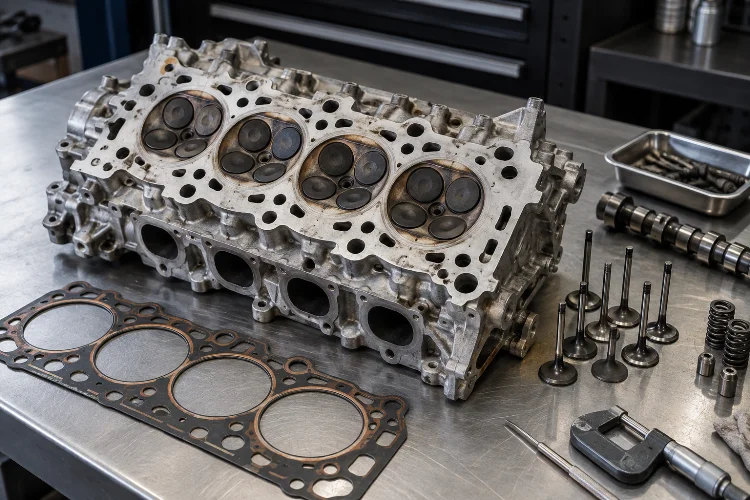
Most drivers rarely think about the cylinder head until something goes wrong. Then suddenly terms like blown head gasket, warped head, valve damage, or overheating start appearing on repair estimates.
That can make the cylinder head sound mysterious and intimidating. In reality, it is one of the most important parts of an internal combustion engine.
Sitting above the engine block, the cylinder head helps form the combustion chambers, controls airflow through the intake and exhaust valves, supports components such as camshafts and spark plugs, and helps manage engine temperature.
Understanding Cylinder Head Explained: Parts, Functions, and Problems is useful even if you never plan to rebuild an engine yourself.
Knowing what happens in this part of the engine can help you recognize warning signs earlier, understand repair advice, and appreciate how combustion, cooling, lubrication, and valve timing all come together.
Here is a beginner-friendly look at what the cylinder head does and why it matters so much.
What Is a Cylinder Head?
The cylinder head is a large metal component mounted on top of the engine block.
Together with the engine block and pistons, it helps form the combustion chambers where fuel and air burn. In many modern engines, the cylinder head also contains the intake and exhaust valves, valve springs, camshafts, spark plugs, and passages for coolant and engine oil.
Most passenger-car cylinder heads are made from aluminum alloys because aluminum is relatively lightweight and transfers heat efficiently. Cast iron is still used in some engines because of its strength and durability.
The head is bolted tightly to the engine block.
Between the two sits an extremely important sealing component called the head gasket. This gasket helps keep combustion pressure, engine oil, and coolant in their proper passages.
Because the cylinder head experiences high temperatures and pressure, precise manufacturing and correct installation are essential.
What Are the Main Parts of a Cylinder Head?
A modern cylinder head contains several systems packed into a surprisingly small area.
Combustion Chambers
The underside of the cylinder head usually forms the upper portion of each combustion chamber.
This is where compressed air and fuel are ignited in a gasoline engine, or where injected diesel fuel burns after compression raises the air temperature.
The shape of the combustion chamber influences airflow, compression, flame travel, efficiency, and emissions.
Intake and Exhaust Valves
Valves control how gases move through the engine.
The intake valves allow fresh air-or air mixed with fuel in some systems-to enter the cylinder. The exhaust valves open after combustion so burned gases can leave.
Valve springs close the valves once the camshaft stops pushing them open.
1. Camshafts
In overhead-cam engines, one or more camshafts sit inside or above the cylinder head.
The camshaft’s lobes operate the valves according to precise timing. Many modern engines use DOHC, or dual overhead camshaft, designs with separate camshafts for intake and exhaust valves.
2. Spark Plugs or Fuel Injectors
Gasoline engines generally position spark plugs in the cylinder head so the spark can ignite the compressed air-fuel mixture.
Direct-injection engines may also place fuel injectors directly into the combustion chamber through the head.
Diesel engines commonly position injectors and, where used, glow plugs in the cylinder head as well.
What Does the Cylinder Head Actually Do?
The cylinder head performs several jobs at the same time.
Its most obvious role is sealing the top of the cylinders. During combustion, pressure inside a cylinder can become extremely high. The head and head gasket must contain that pressure without allowing gases to escape.
The head also controls the engine’s breathing.
Ports inside the casting guide intake air toward the cylinders and exhaust gases away from them. The size, shape, and smoothness of these passages affect how efficiently the engine moves air.
Performance engine builders often focus heavily on cylinder-head airflow because an engine cannot make strong power if the cylinders cannot fill and empty efficiently.
The head also supports combustion-related hardware, including valves, spark plugs, injectors, and camshafts.
In simple terms, the engine block contains much of the rotating and reciprocating machinery, while the cylinder head handles a large portion of the airflow and combustion-control work.
How Does the Cylinder Head Stay Cool?
Combustion creates enormous amounts of heat.
Without cooling, the metal around the combustion chamber could quickly reach damaging temperatures.
Cylinder heads contain internal coolant passages, often called water jackets. Coolant circulates through these passages and absorbs heat before carrying it toward the radiator.
Aluminum heads are particularly effective at transferring heat, but they can also be more sensitive to overheating.
If engine temperature becomes excessive, the head may expand unevenly. Severe overheating can cause it to warp, crack, or lose its ability to seal properly against the engine block.
Oil passages are also built into many cylinder heads.
Engine oil lubricates moving valvetrain components such as camshafts, followers, lifters, and rocker arms. Restricted oil flow can cause rapid wear and eventually lead to serious valve-train damage.
That is why both the cooling and lubrication systems have a direct effect on cylinder-head life.
What Is the Relationship Between the Cylinder Head and Head Gasket?
The cylinder head and head gasket work as a team.
The gasket sits between the cylinder head and engine block and seals several different environments that must remain separate.
It has to contain combustion pressure while also preventing coolant and oil passages from leaking into each other.
A head gasket failure can therefore create several very different symptoms.
Coolant may enter a combustion chamber and produce persistent white exhaust smoke. Combustion gases may enter the cooling system and create excessive pressure. Oil and coolant can sometimes mix, producing a creamy or milky substance.
In other cases, compression can leak between neighboring cylinders and cause misfires or reduced engine power.
A failed gasket does not always mean the cylinder head itself is ruined. However, overheating that causes a gasket failure can also warp the head surface.
That is why mechanics often check cylinder-head flatness during major head-gasket repairs.
Common Cylinder Head Problems
Cylinder heads are durable, but they operate in a harsh environment.
1. Warped Cylinder Head
Overheating is one of the most common causes of head distortion.
When the engine becomes excessively hot, the head can expand unevenly. Once cooled, it may no longer be perfectly flat.
Even a small amount of distortion can make sealing difficult.
2. Cracked Cylinder Head
Severe heat stress can cause cracks in the casting.
Cracks may allow coolant, oil, or combustion gases to travel where they should not. Some cracks are visible, while others require pressure testing or specialized inspection to detect.
3. Burned or Damaged Valves
Valves operate under intense temperatures and repeated mechanical loads.
If a valve does not seal correctly, hot combustion gases can pass around its edge and gradually damage the valve face or seat.
This may cause compression loss, rough running, or misfires.
4. Worn Valve Guides and Seals
Valve guides keep the valves moving correctly inside the cylinder head.
Valve stem seals help control how much engine oil reaches the valve stems. When these components wear, the engine may begin burning oil and producing bluish exhaust smoke.
5. Camshaft and Valvetrain Wear
Poor lubrication can damage camshaft lobes, followers, lifters, or rocker arms.
This type of wear can create ticking noises, reduced valve movement, poor performance, or metal contamination in the engine oil.
Symptoms of a Bad Cylinder Head
Cylinder-head problems can produce many different symptoms, which means diagnosis is not always simple.
One common sign is repeated overheating.
If coolant disappears without an obvious external leak, it may be entering the engine internally. Bubbles in the coolant reservoir, unusually hard cooling-system hoses, or exhaust gases in the coolant may also indicate sealing problems.
Loss of compression can create rough idle, misfires, weak acceleration, or difficult starting.
Oil consumption and blue smoke may suggest worn valve seals or guides, while white smoke may indicate coolant entering the combustion chamber.
Drivers may also notice ticking, tapping, or rattling noises from the upper engine.
No single symptom automatically proves cylinder-head failure. A professional diagnosis may include compression testing, cylinder leak-down testing, cooling-system pressure testing, combustion-gas testing, or electronic diagnostics.
Replacing parts based only on symptoms can become very expensive very quickly.
Why Overheating Is So Dangerous
Few things threaten a cylinder head faster than overheating.
The problem is not simply that the engine gets hot. The real danger comes from excessive and uneven thermal expansion.
The engine block and cylinder head may be made from different metals that expand at different rates.
For example, an aluminum cylinder head mounted on a cast-iron block responds differently to heat. When temperatures climb too high, clamping force and sealing pressure can become uneven.
That stress can contribute to head-gasket failure or head distortion.
If your temperature warning light appears or the gauge suddenly moves into the red zone, continuing to drive can turn a relatively small cooling-system problem into a very expensive engine repair.
A leaking radiator hose or failing thermostat is usually much cheaper than a cylinder-head replacement.
Can a Cylinder Head Be Repaired?
A damaged cylinder head does not always need to be replaced.
Machine shops can often inspect, clean, pressure-test, and resurface cylinder heads.
Resurfacing removes a small amount of material from the mating surface to restore flatness. Valve seats can also be repaired, valves replaced, and worn guides serviced depending on the design.
Cracks are more complicated.
Some cracked heads can be professionally repaired, but severe structural damage may make replacement the safer option.
Modern cylinder heads also require careful measurements because removing too much material during machining can affect compression ratio or valve timing geometry.
This is why cylinder-head repairs are usually best handled by experienced professionals with proper measuring and machining equipment.
The work can be labor-intensive because removing the head may require disassembling a large portion of the engine.
How Can You Prevent Cylinder Head Damage?
The best strategy is to protect the systems that protect the head.
Maintain the cooling system according to the vehicle manufacturer’s recomendations. Old coolant can lose corrosion protection, while low coolant levels can lead to dangerous hot spots.
Never ignore an overheating warning.
Regular oil changes are equally important because the cylinder head contains moving components that depend on proper lubrication.
Use the correct engine oil specification and avoid extending oil-change intervals far beyond manufacturer guidance.
If the engine begins misfiring, losing coolant, producing unusual smoke, or overheating repeatedly, investigate the cause early.
Small problems can become major repairs if the engine continues operating under damaging conditions.
Good maintanance will not guarantee that a cylinder head lasts forever, but it can dramatically reduce unnecessary wear and thermal stress.
Cylinder Head vs. Engine Block: What Is the Difference?
Beginners sometimes confuse these two major components.
The engine block forms the main lower structure of the engine. It contains the cylinders and typically houses the crankshaft and pistons.
The cylinder head sits above the block.
It generally contains the valves, ports, combustion-chamber surfaces, and much of the valvetrain.
The head gasket seals the joint between them.
Both parts must work together precisely. Even a tiny sealing problem at their mating surfaces can affect compression, coolant flow, oil flow, and engine performance.
You can think of the engine block as the foundation and the cylinder head as the breathing and combustion-control section sitting on top.
The cylinder head is far more than a metal cover on top of an engine. It forms part of the combustion chamber, controls intake and exhaust flow, supports valves and camshafts, directs coolant and oil, and helps maintain compression.
Because it performs so many jobs, problems such as overheating, warped surfaces, cracked castings, worn valves, or gasket failure can quickly affect the entire engine.
The good news is that many serious failures can be reduced through proper cooling-system care, regular oil changes, and early diagnosis of unusual symptoms.
If you want to understand engines more deeply, study the cylinder head alongside the head gasket, valvetrain, camshaft, cooling system, and engine block.
Together, these components reveal how much precision is requred to keep an internal combustion engine running reliably.