Cars rarely develop serious engine trouble without giving some kind of warning. The first clue may be a strange noise, a dashboard light, a burning smell, rough acceleration, or a small puddle underneath the vehicle.
Unfortunately, many drivers continue driving because the car still seems to work. Learning about the most common engine problems and their symptoms can help you respond before a minor fault becomes a major repair.
You do not need to diagnose every component yourself. The goal is to recognise when something has changed and understand how urgently it needs attention. One symptom can also have several possible causes.
Rough idling, for example, might come from a worn spark plug, faulty ignition coil, air leak, dirty injector, or internal compression problem. Proper testing is therefore more reliable than replacing parts based on guesswork.
Here are the engine issues every car owner should be able to recognise.
Engine Misfires and Rough Running
An engine misfire occurs when combustion fails to happen correctly in one or more cylinders. The affected cylinder may produce less power or no useful power during that combustion cycle.
Common symptoms include shaking at idle, hesitation during acceleration, reduced performance, poor fuel economy, and a check engine light. The exhaust note may also sound uneven, especially when the vehicle is stationary.
Worn spark plugs and faulty ignition coils are frequent causes in petrol engines. NGK lists misfiring, rough idling, reduced power, difficulty starting, and an illuminated check engine light among the symptoms associated with ignition coil failure.
Fuel-injector faults, intake leaks, low fuel pressure, and loss of cylinder compression can create similar behaviour. This is why reading the stored diagnostic trouble codes is only the beginning of the investigation.
When a Misfire Is Urgent
A steady check engine light generally means the car should be inspected soon. A flashing light can indicate a severe misfire that may overheat and damage the catalytic converter.
Reduce your speed, avoid hard acceleration, and stop safely if the engine is shaking heavily or losing significant power. Continuing to drive can turn an ignition repair into a much more expensive exhaust-system problem.
Engine Overheating and Coolant Loss
An engine produces a huge amount of heat, so it relies on coolant, a water pump, radiator, thermostat, hoses, and cooling fans to control its temperature.
Overheating may be caused by low coolant, a leaking hose, a faulty thermostat, radiator blockage, cooling-fan failure, or a worn water pump. A damaged head gasket can also allow combustion pressure to enter the cooling system.
Typical symptoms include a rising temperature gauge, a red coolant warning, steam from under the bonnet, reduced engine power, or a sweet smell caused by leaking coolant. Mazda also identifies power loss and loud knocking or pinging as possible signs that an engine has become too hot.
If the temperature warning appears, turn off the air conditioning, stop somewhere safe, and follow the instructions in the owner’s manual. Do not open the radiator or pressurised coolant cap while the engine is hot because boiling coolant and steam can cause serious burns.
Repeated overheating should never be treated by simply adding coolant again and again. The system needs to be checked for leaks and component failure.
Oil Leaks, Low Pressure, and Burning Oil
Engine oil reduces friction, protects bearings, helps manage heat, and carries contaminants toward the filter. Problems begin when the engine loses oil, burns it internally, or cannot circulate it at the correct pressure.
External leaks may leave brown or black spots beneath the vehicle. You may also notice oil around the valve cover, oil pan, filter, drain plug, or engine seals.
Oil reaching a hot exhaust component can create smoke or a strong burning smell. Toyota notes that a burning-oil odour may point to a leak or an overheating-related problem that deserves prompt investigation.
Internal oil consumption may produce blue or blue-grey exhaust smoke. Worn piston rings, cylinder wear, valve-seal problems, and some turbocharger faults can allow oil to enter the combustion chamber.
Motorservice explains that worn or damaged piston rings can contribute to poor compression, increased crankcase gases, and excessive oil consumption.
A red oil-pressure warning is more urgent than a routine oil-change reminder. Stop the engine safely and check the manual. Driving without adequate oil pressure can quickly damage bearings, camshafts, pistons, and other internal components.
Difficult Starting, Stalling, and Uneven Idling
An engine needs the correct combination of air, fuel, compression, ignition, and timing to start. A problem in any of these areas can cause extended cranking or prevent the engine from starting at all.
A weak battery or starter motor may be responsible when the engine turns slowly. However, if it cranks at normal speed but does not start, the fault may involve fuel delivery, ignition, engine sensors, compression, or timing.
A petrol engine that starts but idles unevenly may have worn plugs, weak coils, leaking intake hoses, a dirty throttle body, or contaminated injectors. Diesel hard-starting problems may involve glow plugs, fuel pressure, injectors, or compression.
NGK identifies hard starting, misfiring, reduced fuel efficiency, rough idling, and black or white smoke as possible symptoms of defective diesel glow plugs.
Unexpected stalling is particularly important because it can create a safety risk in traffic. Record when it happens-during cold starts, braking, acceleration, or after the engine becomes hot-as this information can help a technician narrow down the cause.
Timing Problems and Unusual Engine Noises
The timing system keeps the crankshaft and camshaft synchronised so the pistons and valves move in the correct sequence. Depending on the engine, this job is performed by a timing belt, timing chain, or gears.
A worn timing chain may produce rattling, particularly during startup. Belt tensioners and pulleys can create squealing, clicking, or grinding noises when their bearings or tensioning mechanisms begin to fail.
Gates explains that a small timing disruption may cause poor engine operation, while a major loss of synchronisation can prevent the engine from running at all.
Some engines are interference designs. If the timing belt breaks or the chain jumps far enough, the pistons may strike open valves, resulting in major internal damage.
Not every sound comes from the timing system. Ticking may involve low oil pressure, valve-train wear, or fuel injectors. Deep knocking can indicate bearing damage, while pinging under acceleration may be related to abnormal combustion.
A squealing noise may come from the auxiliary belt or tensioner rather than inside the engine. Gates lists rattling, belt squeal, misalignment, and belt jumping among the possible signs of worn tensioner or idler components.
Exhaust Smoke and Unusual Smells
Exhaust smoke can reveal what is entering the combustion chamber. The colour, duration, and conditions under which it appears are useful diagnostic clues.
Blue smoke usually suggests that engine oil is being burned. It may appear during acceleration, after idling, or when the engine first starts, depending on the source of the leak.
Thick white smoke that continues after the engine warms up may indicate coolant entering the cylinders.
Possible causes include a damaged head gasket, cracked cylinder head, or another internal cooling-system leak. Gates includes white exhaust smoke or coolant contamination in the oil among possible head-gasket warning signs.
Black smoke commonly indicates that too much fuel is being burned or that insufficient air is reaching the engine. Potential causes include injector problems, restricted airflow, inaccurate sensor readings, or fuel-system faults.
A small amount of water vapour during a cold start can be normal, especially in cool weather. Persistent dense smoke, however, should be investigated.
Fuel smells may indicate incomplete combustion or a leak. Sweet odours can come from coolant, while hot oily smells may point to lubricant reaching a heated component.
Loss of Power and Low Compression
A noticeable reduction in acceleration does not always mean the entire engine has failed. A clogged air filter, faulty airflow sensor, weak fuel pump, ignition fault, blocked exhaust, or turbocharger problem can all limit performance.
Some cars enter a reduced-power or limp mode when the engine computer detects a fault. This protective setting may limit throttle response or engine speed to reduce the risk of further damage.
Internal wear can also reduce power. Each cylinder must seal effectively during compression, and worn piston rings, damaged valves, or a failed head gasket can allow pressure to escape.
Low compression may cause hard starting, rough running, misfires, excessive crankcase pressure, and poor acceleration. A compression test or cylinder leak-down test can help identify whether pressure is escaping through the valves, piston rings, or head gasket.
Avoid assuming that low power automatically means the engine needs rebuilding. Electronic, ignition, airflow, fuel, transmission, and exhaust faults can create similar symptoms and may be much easier to repair.
What to Do When You Notice Engine Trouble
Begin by observing exactly what has changed. Note whether the engine is cold or warm, which warning lights appear, when the noise occurs, and whether smoke has a particular colour.
Check the oil and coolant levels only when it is safe and according to the owner’s manual. Look beneath the car for leaks, but never place yourself underneath a vehicle that is supported only by a standard jack.
Arrange prompt diagnosis when the check engine light remains on, performance falls, or unusual noises continue. Stop driving when you see a flashing engine warning, red oil-pressure light, overheating warning, heavy smoke, severe shaking, or sudden loss of power.
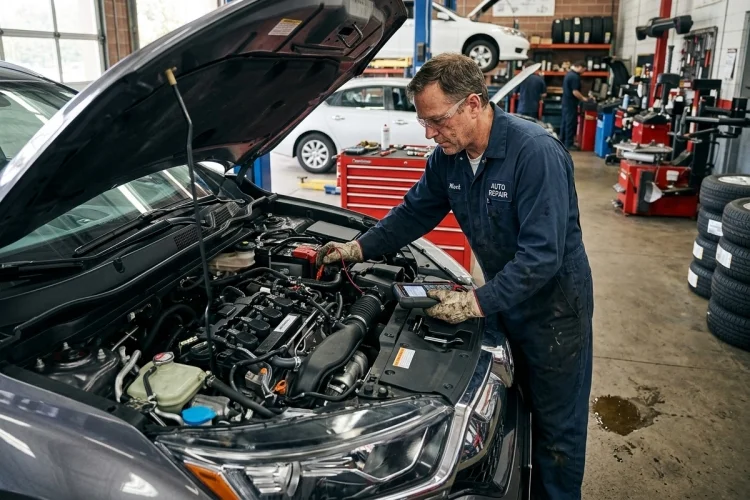
An OBD-II scan can provide useful fault codes, but a code is a clue rather than proof that a particular part has failed. Accurate diagnosis may require sensor data, pressure testing, electrical checks, compression testing, or physical inspection.
The most common engine problems include misfires, overheating, oil leaks, low oil pressure, starting difficulties, timing faults, and loss of compression.
Their symptoms may include warning lights, rough idling, unusual noises, coloured exhaust smoke, fluid loss, reduced power, or rising temperature.
Because several faults can produce similar signs, avoid replacing components without proper testing. Instead, pay attention to changes, record when they happen, and arrange diagnosis before the problem becomes worse.
Check your fluids regularly, follow the manufacturer’s service schedule, and never ignore urgent red warnings or a flashing check engine light. Recognising trouble early is one of the simplest ways to protect your engine, reduce repair costs, and keep your car dependable.